

night heron books & coffehouse
Address: 107 E. Ivinson Avenue, Laramie, WY 82070
Website: https://nightheron.square.site/
Country Represented: Denmark and Ukraine
Special:
Smorrebrod- open face sandwiches (Denmark)
Walnut Crescent Cookies (Ukraine)
Emily Edgar (Denmark)
UW Creative Services
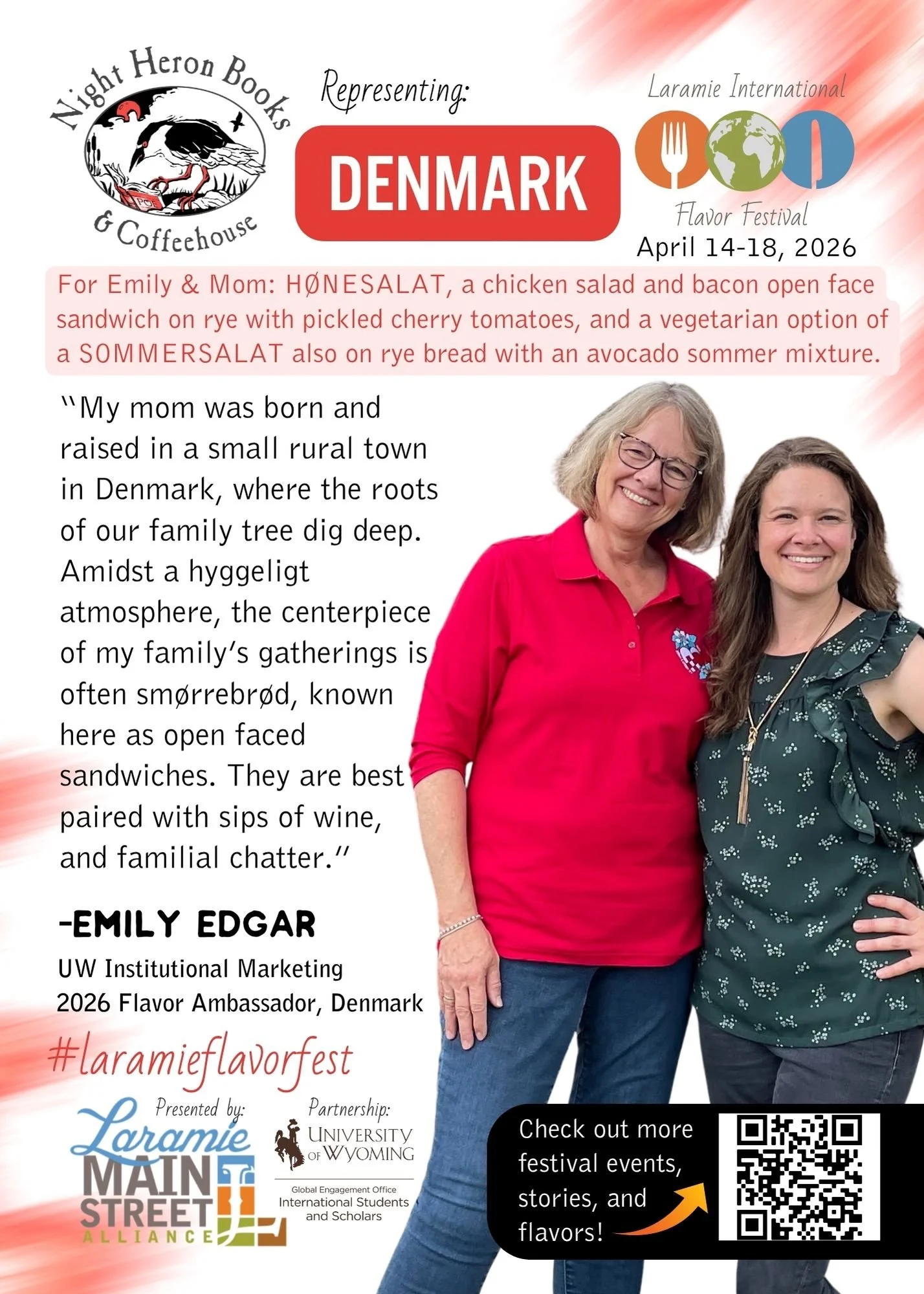
My mom was born and raised in a small rural town in Denmark, where the roots of our family tree dig deep. Although we do not get to visit with our family overseas very often, my mom has always encouraged my brothers and I maintain a strong connection with our heritage and loved ones.
Amidst a hyggeligt atmosphere, the centerpiece of my family’s gatherings is often food. This is most present when we gather to celebrate Christmas each year. Usually, we enjoy a pork roast or ham, however, this past year my mom opted to wield her magic in the kitchen and cook up something a little different. This time, my family brought out the fine porcelain and platters to enjoy a series of courses centered around smørrebrød, commonly known as “open faced sandwiches.” Comprised of buttered rye bread stacked with all sorts of curated delicacies, smørrebrød is a regular “light lunch” choice for Scandinavians, but can also be incorporated into courses for more festive meals. The bottom layer is typically meat based – cold cuts, pickled herring, liver pate, chicken salad, etc. – but could also include potatoes or avocado. The savoriness is enhanced with remoulade, curried egg or a similar cream sauce, and then topped with veggies such as tomatoes, cucumbers, pickled beets, or onions. Each masterpiece is finished with a variety of greens and other garnishes – my favorite being crispy fried onions!
Although I have eaten smørrebrød many times before, enjoying it in between bites of frikadeller, sips of wine, and familial chatter this past Christmas was something truly special. My mom had prepared multiple courses with complementary flavors perfectly placed on platters for us to construct from at whim. Moving through each course, I found we were focused on the food and flavor more than usual, savoring each element that contributed to the whole. Of course, the food was nothing but delicious, but the experience of sharing a meal like this with my family is what I will cherish the most.
Deb Kleinman (Ukraine)
Consultant
(Ukraine) In the 1960s, my mother—raised Presbyterian—married my father, who was raised in a Jewish family on Long Island. This kind of interfaith marriage was far less common then than it is now, and both families were shades of uncomfortable with the relationship. They expressed that discomfort in ways that were mostly invisible to me as a child, registering only as a low-grade sense that things were occasionally a bit tense.
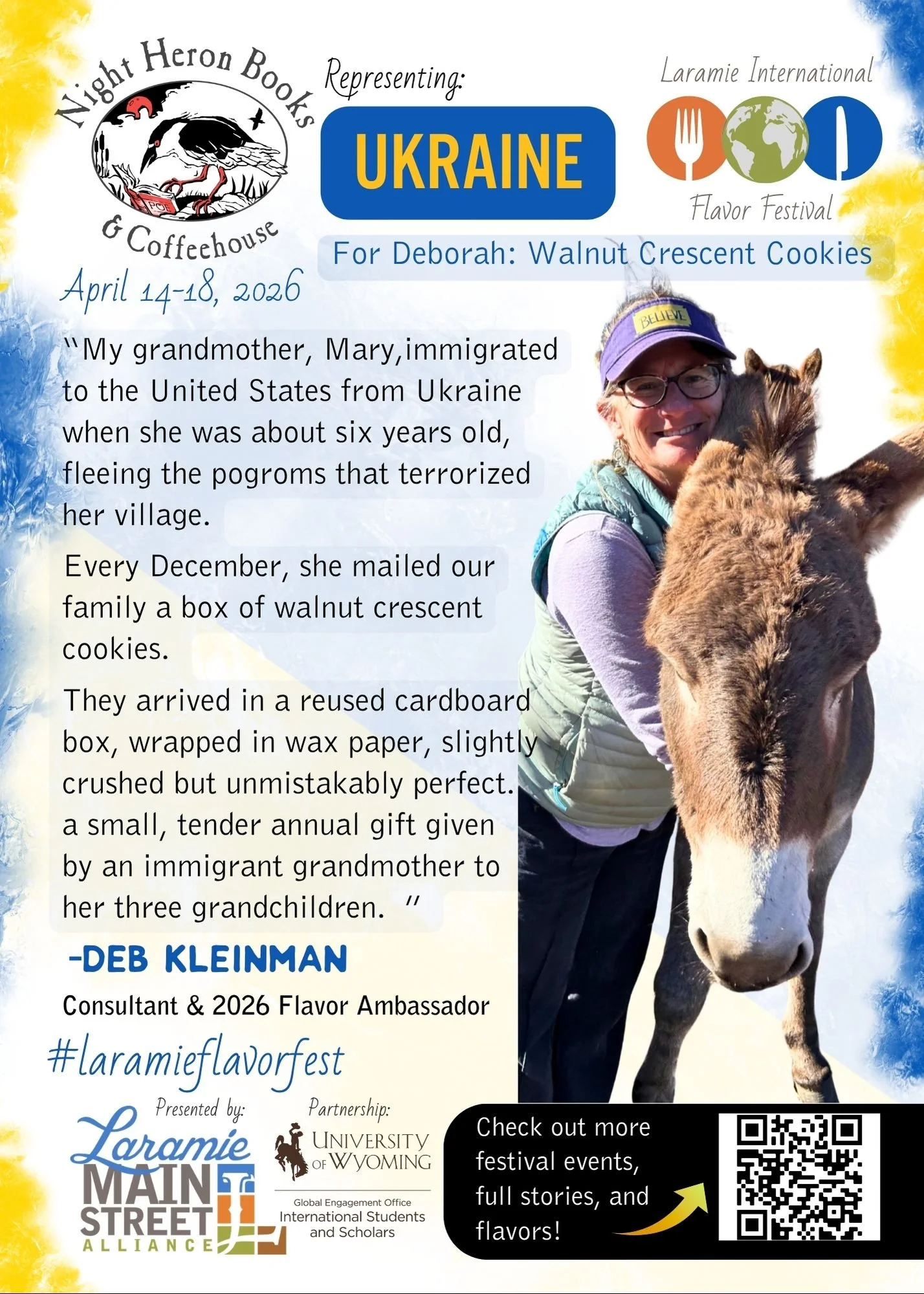
My paternal grandmother, Mary, immigrated to the United States from Ukraine when she was about six years old, fleeing the pogroms that terrorized her village. She told stories of her mother hiding her in the backyard bread oven when Cossacks rode through, searching for Jews to kill. Understandably, she remained a complicated woman for as long as I knew her. Today we would recognize this as PTSD and intergenerational trauma. She was shaped by loss and survival, and was also a loving grandmother in her own distinctive way. She taught me to play cards and made me jewelry created from shells she collected during her beach walks.
Every December, she mailed our family a box of walnut crescent cookies. They arrived in a reused cardboard box, wrapped in wax paper, slightly crushed but unmistakably perfect. I cannot find the index card with her recipe written on it in pencil, in her shaky handwriting. They crossed religious and cultural boundaries effortlessly, offering sweetness without argument—a small, tender annual gift given by an immigrant grandmother to her three grandchildren.